
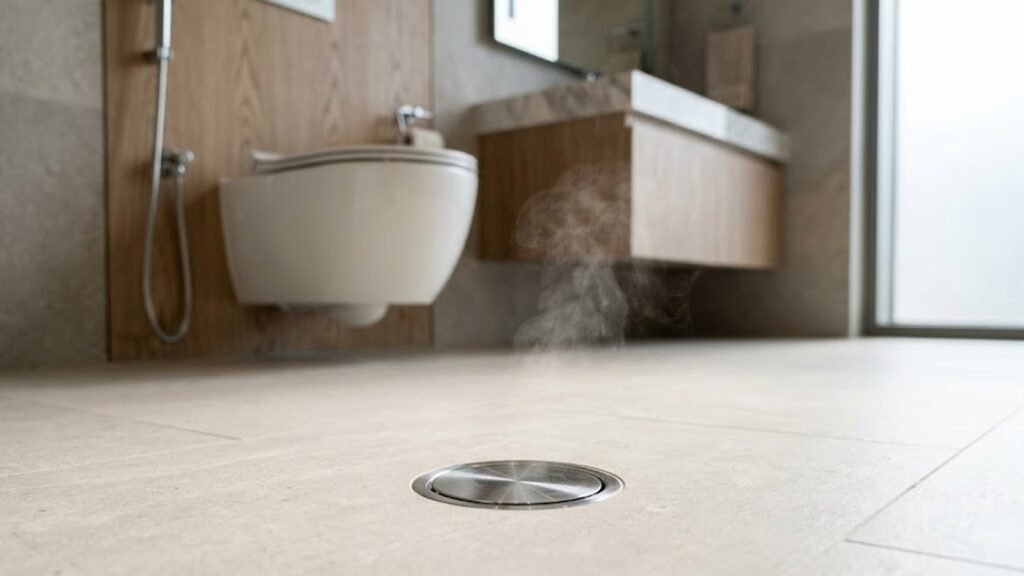
“We have a bad smell coming from the master bedroom floor drain, always. We already had a cap put on as a cover, and we cleaned it, but the smell is still there. Please come ready to fix it, not just diagnose.”
That message lands more often than you would think, and the worry behind it is usually the same: is this just my bathroom, is the whole drain backing up, and who do I even call to fix a smell?
Here is the reassuring part. A bad bathroom smell is almost never something you did wrong, and it is rarely the disaster it feels like at first. It is also not always a plumber. The smart move is to work out which problem you have first, because the answer ranges from a thirty-second check to a part that needs replacing.
Bottom line: A persistent bathroom smell usually means something real has gone wrong, most often a dry or damaged floor trap, a blocked drain, or a worn seal under the toilet. A few causes are not plumbing at all. This guide helps you narrow down which one you have, what is safe to try yourself, and where the line sits between a quick fix and a bigger job.
- A blocked or dry floor trap letting sewer gas up: the most common cause.
- A damaged floor trap or cracked drain pipe, where smell seeps in through the floor.
- A worn seal under the toilet (the WC connector), often with darkening silicone at the base.
- Causes that are not plumbing at all: a dead bird or rat in the ceiling void, mould from a hidden leak, or a stuck exhaust fan that never clears the air.
- Safe to check yourself: slow-draining water, whether the exhaust fans run, and whether your floor traps still have their covers.
Why a bathroom starts to smell
Most bathroom smells come down to one of two things: either dirty water is sitting or backing up where it should be draining away, or the barrier that normally keeps drain gas out of the room has failed. Once you know that, the usual causes line up in a sensible order.
The most common cause: a blocked or failed floor trap
Every floor drain has a trap, a small water seal that sits in the pipe and blocks sewer gas from rising back into the room. When that seal is lost or the drain below it is blocked, the smell comes straight up.
In Dubai this happens in a few ways. A drain that backs up, even slightly, will smell almost at once. A trap can be damaged so it no longer holds its seal. And a guest bathroom that is rarely used can lose its seal to evaporation, which is why the cover on a floor drain matters more than people realise.
A quieter version of the same problem is a cracked or broken drain pipe behind the floor or wall. There the waste no longer runs cleanly away, it seeps into the surrounding ground, and the smell works its way through the whole unit rather than rising from one drain.
The seal under your toilet
If the smell is strongest right around the WC, the likely culprit is the connector seal between the toilet and the soil pipe. As it wears, drain gas escapes from the base, and water can begin to weep into the floor underneath.
The tell is usually visible: the silicone around the base of the toilet darkening over time as moisture collects there. Interestingly, a worn seal rarely makes the toilet wobble, so a stable toilet does not rule it out.
When it is not plumbing at all
Not every bathroom smell is a drain. A surprising number turn out to be something else entirely, and it is worth knowing them before you assume the worst.
The one that catches people out is a dead bird or rat. They get into ceiling voids or near extractor ducts, and if one dies up there the smell arrives with no obvious source. Mould is another, often from a slow leak soaking into a wall or sitting unseen above the bathroom ceiling, wet before anything shows on the surface.
One Dubai resident described a strong sewage smell that hit the moment the living-room AC switched on, and noticed it affected the whole vertical stack of apartments above and below. That points away from their own flat and toward the building’s shared drainage, which is a different problem with a different owner.
That last case matters for a different reason. When a smell affects more than your unit, it is usually the building’s shared drainage rather than anything inside your walls, and that is for the building’s own maintenance to resolve.
Communal drains, the main soil stack, and concealed pipework in the slab sit outside what a contractor like us would normally touch. More on where that line falls below. The same smell from the AC side, rather than the drains, is its own diagnosis, which we cover in our guide to why an AC leaks water inside.
What you can safely check yourself
Before calling anyone, a few checks are safe and sometimes telling, and they cost nothing.
First, watch how the water drains. If it is going down slowly, that is an early sign of a blockage building, well before a full backup.
Second, check your exhaust fans, in the bathrooms and the kitchen, since a fan that has stopped running lets smells linger that should have cleared. Third, check that your floor traps still have their covers in place, because that cover helps keep drain smells out of the room.
You can also open the bottle trap under a sink, if it is the kind that unscrews, and clear out any trapped debris. Be gentle with the strainer or grating, though, as they are easily cracked.
One thing to avoid: pouring strong drain acid down a slow or smelly drain. It is harsh enough to eat through a pipe, and a hole in a concealed pipe turns a simple visit into opening the floor to replace it. If a drain is genuinely blocked, jetting it clears the line without that risk.
How our technician finds the source
When the easy checks are not the answer, a technician works through a set order rather than guessing, which keeps the search quick and avoids opening up more than necessary:
- Find the strongest smell first: the area where it is most intense narrows the search straight away.
- Check for a blockage: a plunger on the WC first, then a drain spring or rod to push further down the line.
- Check the WC connector: if the smell persists, the seal under the toilet is checked, which means lifting and refitting the WC, so it comes later in the order.
- Check the ceiling void: where the room is small and nothing else explains it, the space above is opened up and inspected.
- Check ventilation and standing water: the exhaust fans, and any stagnant water that could be the source.
By the end of that sequence the cause is usually clear, along with whether the fix is a quick one or a larger job.
What a maintenance contract covers, and what is charged
If you hold a maintenance contract with us, the labour for all of this is included: the callout, the diagnosis, clearing a blocked or dry trap, and lifting and refitting the toilet to check the seal. The labour to find and stop the smell is the covered part.
What is charged separately is materials. If the seal under the toilet needs replacing, that part is billed at our standard rate, with your approval first. Our team carries the common connector types on the van, so when the toilet is opened the seal can be replaced in the same visit rather than booking you a second one.
A stubborn blockage that needs the drain line jetting is the one thing that sits outside the contract. We arrange it through a specialist, at a discounted rate for contract holders, rather than including it in the cover.
And where the smell traces back to the building fabric, that is a separate, chargeable job. If a failed waterproof layer or a cracked floor is the real source, re-waterproofing or re-tiling is out-of-scope work, quoted separately.
Stopping the smell is covered; rebuilding the floor it came through is not. You can read the full picture in our guide to what a maintenance contract actually covers.
How to stop it coming back
Most bathroom smells trace back to a drain that was quietly heading for trouble, which is the good news, because prevention is simple. Run water through any rarely-used floor drains now and then to keep their seals topped up, keep the covers on, and have drains and traps checked as part of a routine service rather than waiting.
It is worth checking the kitchen too, not just the bathrooms. Kitchen traps are the most blockage-prone of all, since grease, oil and food waste collect there faster than anywhere else. We have written separately on why preventive maintenance pays for itself in Dubai if you want that side of it.
Frequently asked questions
Why does my bathroom smell like sewage?
The most common reason is the floor drain. Every floor trap holds a small water seal that blocks drain gas from rising into the room, and when that seal is lost, or the drain below it is blocked, the smell comes straight up. A rarely-used guest bathroom is especially prone, because the seal can simply dry out. Less often it is a worn seal under the toilet, or a problem in the building’s shared drainage.
Can I fix a smelly bathroom drain myself?
You can safely do the simple checks: see whether water is draining slowly, make sure the exhaust fan is running, keep the floor-drain cover in place, and clear any debris from a sink trap that unscrews. What you should not do is pour strong drain acid down it, since that can damage the pipe and turn a small issue into a much larger one. Past the easy checks, a blocked or damaged drain needs a technician.
Why does my toilet smell even after cleaning?
If the smell is worst right around the toilet and cleaning does not shift it, the connector seal between the toilet and the drainpipe may have worn. As it goes, drain gas escapes at the base and water can weep into the floor, often showing as darkening silicone around the bottom of the WC. Replacing that seal means lifting and refitting the toilet, so it is a technician job rather than a clean.
Does a maintenance contract cover a bathroom smell?
The labour does, on every tier: the callout, finding the source, clearing a blocked or dry trap, and lifting the toilet to check the seal are all covered. Materials are charged separately, such as a replacement seal, always with your approval first. Clearing a stubborn line by jetting is arranged through a specialist at a discounted rate for contract holders, and building-fabric work such as re-waterproofing or re-tiling is quoted as a separate job.
Why does the smell affect more than just my apartment?
When a drain smell reaches several apartments in the same vertical line, it usually points to the building’s shared drainage rather than anything inside your own walls. That is for the building’s maintenance to resolve, since communal drains and the main stack sit outside an individual unit. A technician can confirm whether the source is inside your flat or beyond it.
Not sure whether your bathroom smell is a quick fix or something that needs a proper look? Tell us what you are noticing and we will help you work it out, even if it turns out to be something you can sort yourself. Call us on 800 FIXO (3496) or message us on WhatsApp +971 800 3496.
The coverage and contract terms referenced in this post reflect our standard AMC contract and ad-hoc rates as of June 2026 and are reviewed periodically. The labour to find and stop a smell is covered callout work; spare parts and materials, specialist drain jetting, and any building-fabric work such as waterproofing or tiling are charged separately and quoted with your approval first.
Details in the opening scenes are drawn from real WhatsApp exchanges; the customers are not identified.