
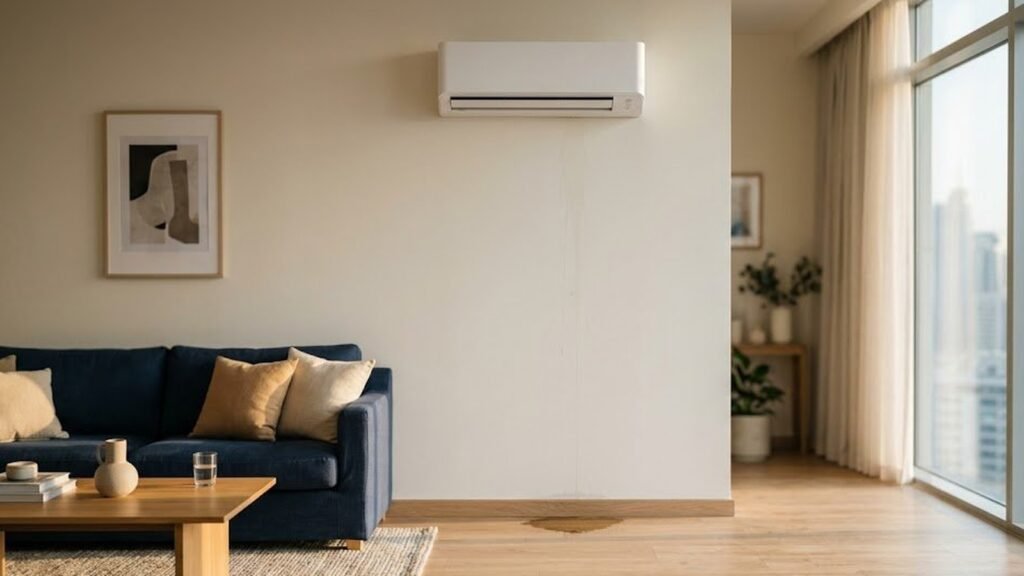
You walk into a room and there is water pooling under the indoor AC unit, or a slow brown stain spreading across the ceiling. The two thoughts most people have next are usually the wrong ones: a pipe has burst, or the air conditioner is broken and this will be expensive.
In a Dubai summer, neither is usually what is happening.
Bottom line: Most indoor AC water leaks are not a plumbing fault or a dead unit. They are a blocked condensate drain, the line that carries away the water your AC pulls out of the air. It is one of the most common and most fixable AC problems in Dubai, and this guide tells you how to spot it, what you can safely check, and when to stop and call someone.
- The usual cause is a blocked drain line, not a burst pipe or a broken AC.
- Summer makes it worse: your AC runs harder, pulls out more water, and the drain tray grows a gel that clogs the line.
- Clear water under the indoor unit, in time with the AC running, points to the drain rather than plumbing.
- You can safely clean the filter and clear the drain tray. Leave anything past that to a technician.
- Clearing the drain is covered callout work. Repairing a ceiling the leak has already damaged is a separate job.
Why your AC leaks water in the first place
Your air conditioner does not only cool the air, it dries it. As warm, humid Dubai air passes over the cold coil inside the indoor unit, the moisture in it condenses into water, the same way a cold glass sweats on a summer day.
That water collects in a tray under the coil and runs out through a drain line to the outside.
In peak summer a single unit can pull a surprising amount of water out of the air every day, because it runs almost without stopping and the air it is drying is far more humid than people expect. All of that water has to leave through one narrow pipe.
The leak starts when that pipe blocks. Over time the drain tray builds up a gel: a mix of dust, the organic material the AC quietly pulls in from the air, and the condensate water itself, which together feed a slow bacterial build-up.
That gel washes down into the drain line and clogs it. With nowhere to go, the water fills the tray and overflows, and that is the puddle under your unit or the stain on your ceiling.
This is why the problem peaks in summer and why a unit that was fine in March starts leaking in July. Nothing broke. The drain simply could not keep up with a tray that was never cleared.
How to tell a drain leak from a real plumbing leak
Before you call anyone, a few signs tell you whether you are looking at a blocked drain or an actual plumbing problem, and they point to different trades.
A condensate drain leak almost always shows up directly under or beside the indoor AC unit, not in the middle of a room or near a bathroom wall. The water is clear and odourless, because it is distilled condensate, not supply or waste water.
It also tracks the AC: worse when the unit has been running hard, easing when it is off. If you switch the AC off for a few hours and the water slows or stops, that is a strong sign the drain is the culprit.
A plumbing leak behaves differently. It does not care whether the AC is on, it often appears away from the unit, and the water may be discoloured or have a smell. If what you are seeing fits that picture instead, the drain line is probably not your problem.
One more branch worth naming: if the unit is leaking and also not cooling properly, that points somewhere else again, usually a frozen coil from a dirty filter, or low refrigerant. That is a different diagnosis with its own guide, and worth treating separately.
What you can safely check yourself
There are two things a homeowner can do safely, and they are also the two things that prevent the problem coming back.
First, the filter. A clogged filter is one of the quiet causes behind a leak, because it chokes airflow and makes the coil ice up, then overflow when it melts. Slide the filter out, wash it under the tap, let it dry fully, and slide it back. Doing this every few weeks through summer makes a real difference.
Second, the drain tray, if your unit gives you safe access to it. Clearing the gel out of the tray before it reaches the line is the single most useful preventive step, and dropping a drain tablet into the tray slows the build-up between cleans.
That is the safe boundary. Clearing a blockage that has already formed deeper in the line is not a homeowner job: it usually needs the drain flushed under pressure, and pushing the wrong thing down the pipe tends to turn a small clog into a bigger one.
If the filter and tray are clean and the unit is still leaking, that is the point to stop and call a technician.
When to switch the AC off and call someone
Some situations are past the self-check stage, and acting quickly limits the damage.
If water is actively overflowing the tray, switch the unit off at the thermostat. It feels wrong in the heat, but a leaking unit left running keeps producing water and makes the mess worse, and water near electrics is its own risk. Move anything valuable clear of the area.
Call a technician if the leak keeps returning after you have cleaned the filter and tray, if it is staining a ceiling or wall, or if you cannot safely reach the tray at all.
When our technician clears a blocked drain, the first step is a water flush to clear the line, and if that does not shift it, a pressurised flush to push the blockage right through.
There is a line worth knowing here. Clearing the blocked drain and stopping the leak is covered callout work. But if the overflow has already stained or damaged the ceiling, repairing that ceiling, the re-skim and the repaint, is a separate job, charged on its own, even though it came from the same leak.
The covered part is stopping the water. Putting right what the water spoiled is its own piece of work.
How to stop it happening again
A leaking drain is almost always a maintenance gap rather than a fault, which is the good news, because the fix is routine.
The three things that keep a drain line clear are the ones our team relies on: wash the filters regularly, clear the drain tray before the gel builds up, and use drain tablets in the tray to slow that build-up between visits.
On a planned maintenance visit, flushing the drain line is part of the standard AC service, which is what stops the tray reaching the point where it overflows in the first place.
This is exactly the kind of small, cheap, scheduled task that is far less trouble than the leak it prevents. We have written separately on why preventive maintenance pays for itself in Dubai if you want that side of it, and on what a maintenance contract actually covers.
Frequently asked questions
Why is my AC leaking water inside my apartment?
The most common cause in Dubai is a blocked condensate drain line. Your AC pulls a lot of water out of humid summer air, and that water drains away through a narrow pipe. When the drain tray builds up a gel of dust, organic matter and bacteria, it clogs the line, the tray overflows, and you see water under the unit or a ceiling stain. It is usually a maintenance issue, not a burst pipe or a broken AC.
How do I know if it is the AC or a plumbing leak?
A drain leak shows up directly under or beside the indoor unit, the water is clear and odourless, and it gets worse when the AC runs hard. Switch the AC off for a few hours: if the water slows or stops, the drain is the likely cause. A plumbing leak ignores whether the AC is on, often appears away from the unit, and the water may be discoloured or smell.
Can I fix a leaking AC myself?
You can safely do the two things that also prevent it: wash the filter and clear the drain tray, dropping a drain tablet in to slow the build-up. Past that, clearing a blockage deeper in the line needs a pressurised flush, and pushing the wrong thing down the pipe usually makes the clog worse. If the filter and tray are clean and it still leaks, call a technician.
Does an AMC cover a leaking AC?
Clearing a blocked drain and stopping the leak is covered callout work, with labour included, on every tier. What is charged separately is any repair to a ceiling or wall the leak has already damaged, such as re-skimming and repainting, because that is out-of-scope building work rather than AC work.
How do I stop my AC drain from blocking again?
Wash the filters regularly, clear the drain tray before the gel builds up, and use drain tablets in the tray between cleans. On a planned maintenance visit, flushing the drain line is part of the standard AC service, which keeps the tray from reaching the point where it overflows.
Not sure whether the water under your AC is a drain problem or something else? Tell us what you are seeing and we will help you work it out, even if it turns out to be a quick fix you can do yourself. Call us on 800 FIXO (3496) or message us on WhatsApp +971 800 3496.
If you would rather not think about drain lines at all, our maintenance contract folds the AC service and drain flushing into a scheduled visit.
The coverage and contract terms referenced in this post reflect our standard AMC contract as of June 2026 and are reviewed periodically. Clearing a blocked drain is covered callout work; repairs to a ceiling, wall or other building fabric damaged by a leak sit outside AMC cover on all tiers and are quoted separately.