What is an AMC, actually? A first-time buyer’s primer.

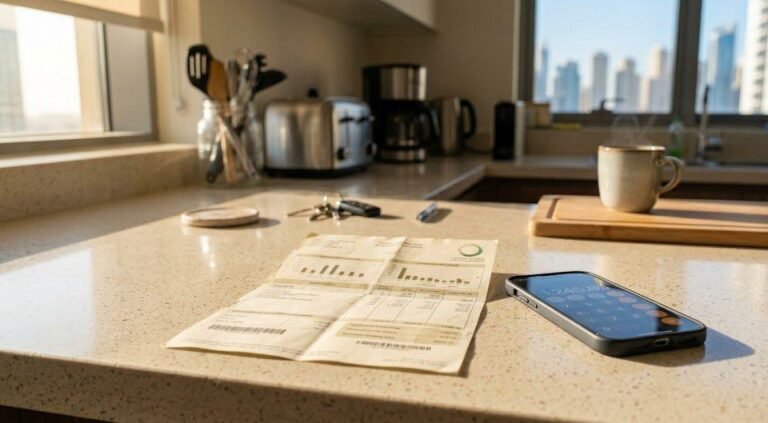
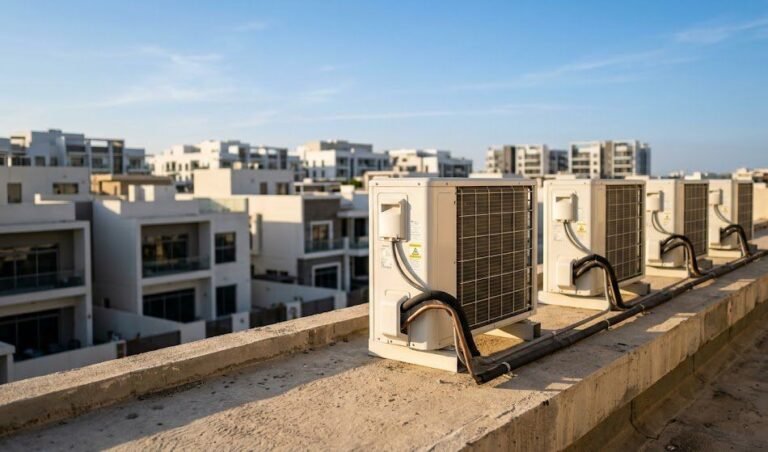
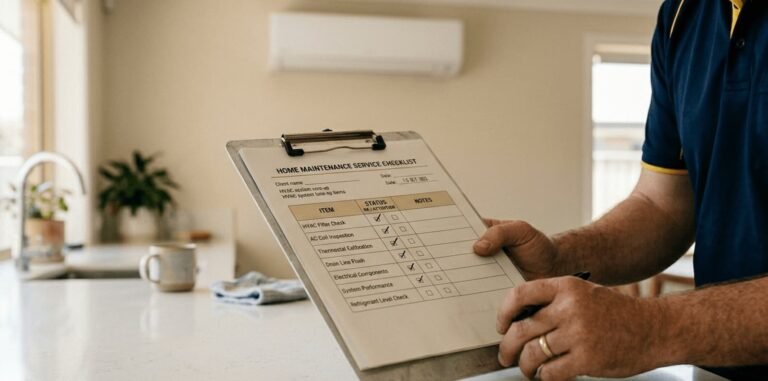
What an Annual Maintenance Contract actually is — not in legalese, but in plain English. The four things you’re really buying, and who should and shouldn’t sign one. Here’s a customer who messaged us in February. She’d just moved into a 1.5-bedroom apartment in Burj Vista, Downtown — three AC units, smart-home wiring, the kind of place where small things break in slightly inconvenient ways every few months. Her opening message: “Hello, I’m looking for a regular handyman on a contractual/retainer basis for my Downtown Dubai apartment. I need a team I can call whenever I need maintenance or small jobs done. Do you offer monthly or annual maintenance contracts, and what do they include?” The thing she’s describing is what the industry abbreviates as an AMC — Annual Maintenance Contract. This post is the primer for someone in roughly her position: aware that contracts like this exist, not yet sure whether one makes sense. We’ll keep it short. What an AMC actually is On paper, an AMC is a 12-month service contract that bundles scheduled servicing, emergency response, and a defined scope of covered work into a single annual fee. Every provider’s AMC is structured slightly differently — there’s no industry standard for what one must include, so if you’re a first-time buyer they can be a bit confusing. The simpler way to understand it is by contrast. Without an AMC, every time something needs fixing — a leaking tap, an AC making a noise, a flickering light, a smell from the bathroom — you go through the same loop. Search, ask friends, get quotes, decide who to use, schedule, manage, pay, hope it doesn’t fail. Each individual job is small. The cumulative drag of doing this 4–8 times a year is real, especially in a Dubai apartment or villa where there’s always something. (We’ve written separately about how that adhoc pricing works in Dubai — the AED 190/hour rate, what it covers, and how to spot a fair quote.) An AMC replaces that loop with a single relationship. One annual fee. One number to call. The provider knows your property, has serviced your AC units before, knows the building’s quirks. Parts are still charged separately on top — the fee covers labour, scheduled work, and call-handling, not the cost of new components. The contract typically runs 12 months and auto-renews unless you cancel. What you’re actually buying The marketing of AMCs tends to lean on either price (“save money”) or peace of mind (“we’ll handle it”). Neither is wrong but neither is precise. Four concrete things separate an AMC from calling someone adhoc when something breaks. 1. A guaranteed emergency response time This is one you can easily undervalue until the day you actually need it. When the AC goes out at 11pm in July, when a pipe bursts on a Friday evening, when there’s a smell of burning from a socket — adhoc maintenance becomes a different market. Companies that responded quickly during business hours suddenly aren’t picking up. The ones that do answer know you’re stuck, and prices reflect it. An AMC contract gives you a written response time — typically 60–120 minutes for true emergencies, 24/7, with the labour included. You’re not negotiating a fee at the worst possible moment because the rate and the response time are already settled in writing. Think of it less like a service subscription and more like AAA for your home. There’s a second flavour of this benefit worth naming: priority during peak demand windows. When the first proper heat wave of summer hits and every adhoc customer is calling for AC servicing or repair at once, AMC customers go to the front of the queue. Same for genuine emergencies during the months when everyone’s systems are working hardest. (What counts as an emergency vs a non-emergency is more nuanced than it sounds, and worth its own post — we’ll cover that separately.) 2. Preventive maintenance, on a calendar AMCs include planned preventive visits — typically AC servicing 2–4 times a year, plus annual or biannual plumbing and electrical inspections. The work isn’t dramatic. A technician comes, services the AC, flushes drain lines, checks pressure, tightens electrical contacts, walks through fixtures. Most visits flag two or three small things and recommend low-cost fixes. On adhoc, this kind of work hardly ever gets booked proactively. The reasoning is rational in the moment — nothing is broken, why am I paying someone to come? — and quietly expensive over time. AC coils that don’t get cleaned drop efficiency, raising your DEWA bill. Drain lines that don’t get flushed clog and overflow. Small leaks caught during a routine plumbing inspection are usually a cheap parts swap; small leaks that aren’t caught can become a much larger waterproofing job a year later. The AMC bundles all of this into a calendar so it just happens — on time, without you having to remember. 3. Discounted hourly rates on out-of-scope work Not everything you’ll need over a year fits inside the AMC scope. Furniture assembly, picture hanging, painting touch-ups, lock changes, heavier handyman tasks — these get charged at the standard hourly rate, with an AMC discount usually in the 10–20% range depending on tier. You might assume an AMC is only about the trades it explicitly covers (AC, plumbing, electrical) and skip past this benefit. If you have a maintenance company in often for general property tasks — multiple properties to manage, a holiday rental, or just a household where small things keep needing fixing — the discount on out-of-scope work alone can offset a meaningful chunk of the AMC fee. 4. The same team, every time This one is the easiest to undersell and the easiest to value once you’ve experienced it. With an AMC, the technicians who turn up know your property. They know your AC units are chilled-water FCUs, not gas-type. They know the building requires permits before drilling into shared walls. They know which bathroom had the tricky outlet that needed silicon last March. They
Why home maintenance in Dubai costs what it costs.

Why home maintenance in Dubai costs what it costs. The AED 190/hour breakdown, the Fix-it-Twice cycle, and the math behind why “cheap” usually means twice. Here’s a scene from this March. A villa owner in Al Furjan messaged us about a persistent bad smell coming from his master bathroom floor drain. He’d used us before — quick plumbing job at the same villa a few weeks earlier. He’d paid happily and even asked for the technician’s name to give him direct feedback (“he was very good”). The kind of repeat customer maintenance companies in Dubai dream about. This time we quoted our standard rate: AED 190 per hour. His reply: “It was 110 last time.” It hadn’t been. It had been AED 150. We told him that. “Ok so why can’t it be the same this time?” That’s the conversation most Dubai maintenance companies don’t bother to have — it’s easier to either lose the job or quietly drop the price and absorb the margin. So instead, we’re going to have it properly, in writing, once. This is why an hour of our work costs what it costs, why prices change, and how to tell — when you’re sitting in front of three quotes for the same job — which one is the fair one. The AED 190/hour rate, broken down Our standard labour rate is AED 190 per hour, Saturday through Thursday, between 9am and 6pm. Outside those hours — Friday, evenings, UAE holidays — it’s higher. Every quote is built on that number plus parts. That AED 190 isn’t going into a technician’s pocket. Here’s roughly how an hour of labour breaks down once you account for everything that has to happen to get a uniformed, insured, trained two-person team — in branded vans, with proper ID — to your door at the time you asked: Where AED 190/hour goes (per visit, 2-tech team) Cost Technician team on-site (2 techs, working hour) AED 53 Technician travel + prep (between jobs) AED 17 Vehicle, fuel, Salik, parking AED 22 Customer acquisition + dispatch AED 25 Backend office (JLT — coordination, inventory, admin) AED 60 Insurance, tools, warranty buffer AED 12 Subtotal — what it costs us per hour AED 189 Margin AED 1 Total billed AED 190 Notice what’s missing from that table: a meaningful margin line. The AED 1 in the second-to-last row isn’t a typo — adhoc labour at AED 190 per hour is, today, essentially break-even for us. We don’t make our living on hourly visits. We make it on Annual Maintenance Contracts and on AC servicing, where the unit economics work differently. Adhoc work covers its own costs and earns the trust that turns customers into AMC clients later. That’s why we don’t feel any pressure to inflate hourly quotes or pad invoices — we’ve already priced the hour at what it costs. One thing worth naming: the parts that go with most jobs do carry a margin. Across a typical visit, that adds roughly AED 20 per hour on top of the labour break-even. So a more accurate way to say it is that AED 190/hour is the price of an hour of labour delivered properly, and the parts margin is what keeps the lights on. The AMC business is still where Fixo Felix actually scales. Which brings us back to the conversation that opened this post. When we launched Fixo Felix, our rate was AED 150 per hour. That number worked when the team was small, the marketing budget was a Google account and a hope, and there wasn’t yet a 90-day workmanship warranty to honour out of our own pocket. As we built out the company — the JLT office, the trained technicians, the warranty buffer, the dispatch team, the branded vans and uniforms that show up at your door — AED 150 stopped covering the cost. AED 190 is the real number for delivering this kind of work at this scale today. As costs rise — wages, insurance, fuel, parts — we’ll need to adjust periodically. As we grow and add teams, the JLT backend cost-per-hour pressures downwards, which offsets some of the increases. The net effect: we expect to move to somewhere in the AED 210–240 range over the next 6–12 months, with future changes likely being incremental rather than dramatic. We’ll announce any new rate on our homepage at least 30 days before it takes effect, so AMC customers and adhoc customers both get fair notice. The “I did it cheaper already” problem Customers tell us this all the time. A few weeks after we quote, the message comes back: “No thanks, I did it cheaper already.” Sometimes the work was fine. Often it wasn’t. We’ve been near these prices ourselves — AED 150/hr was our launch rate, and we know what it does and doesn’t cover. It gets you in the door. It doesn’t get you a return visit when something fails three weeks later, because there’s no margin left in the price to send a technician back. The cheaper quotes you see in Dubai are usually one of two things: a company at that earlier stage, or a company that was never going to support the work afterwards in the first place. When someone quotes you significantly under the market rate for a real job, one of three things is happening: The Fix-it-Twice cycle. The third scenario is the one that quietly drains Dubai homeowners financially. Paying AED 150 twice in six months costs you AED 300 plus two wasted afternoons. Paying AED 280 once costs you AED 280 and a problem that stops being your problem. We call this the Fix-it-Twice cycle, and breaking it is roughly the whole reason Fixo Felix exists. None of this is an argument that expensive is always better. There are maintenance companies in Dubai charging AED 400 for the same tap job we’d do for AED 280, with the same materials, by the same kind of technician — and the difference, almost always, is